


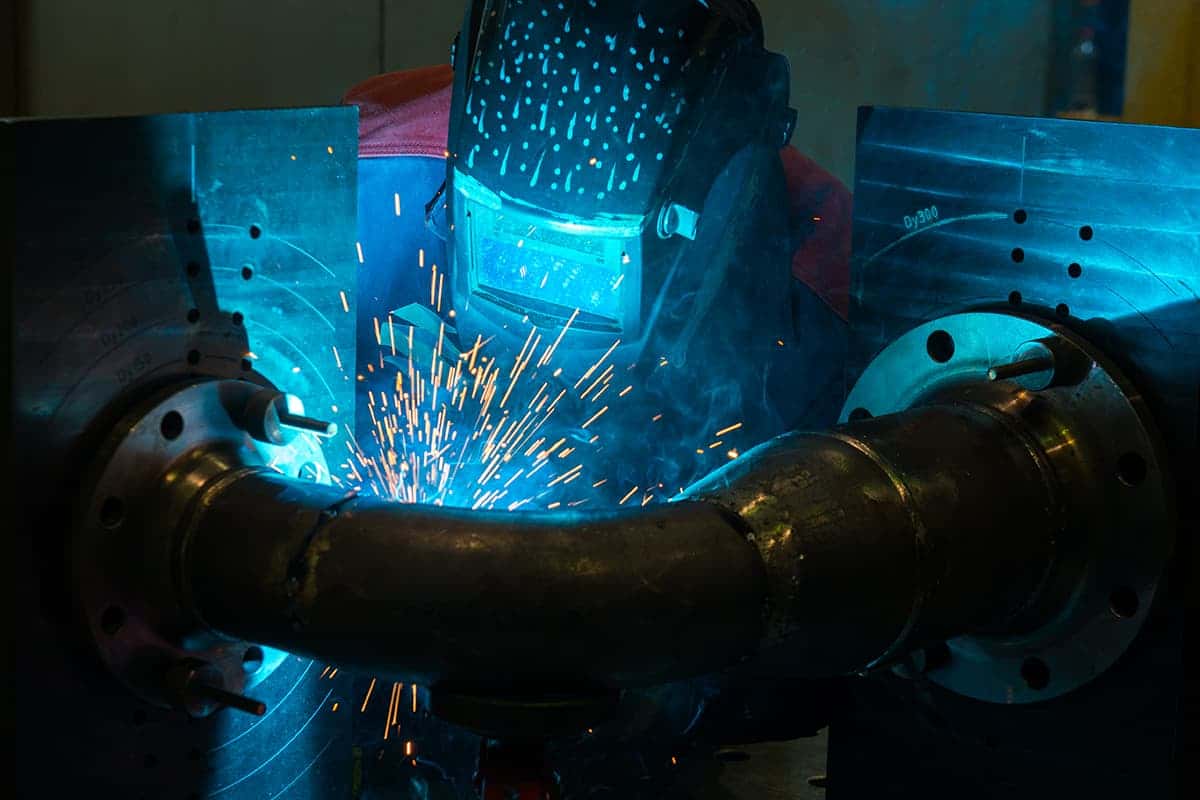
Universal, corrosion-resistant, and incredibly versatile — stainless steel is valued across almost every branch of industry for its unique properties. But how exactly does the welding process of stainless steel look, and does it require any special preparation? Find out with Inox Polska!
Preparing Stainless Steel for Welding
Before welding stainless steel, it’s essential to protect the material from contamination by other metals — especially non-alloy and low-alloy steels. Why is this so important? Any contamination can lead to the formation of corrosion points on the surface.
Stainless steel can be protected by:
- Using special protective films – if you plan to weld while using this form of protection, make sure to remove the film at the point of welding;
- Properly securing the storage surface of elements during assembly work – this can be done with protective films as well as rubber or wooden pads.
Welding Stainless Steel and Proper Clamping
Due to the specific physical properties of stainless steel (a low coefficient of thermal conductivity and a high coefficient of linear thermal expansion), precise clamping is required during welding. How should it be done? Most importantly, ensure that clamping elements do not come into direct contact with carbon steel components. Otherwise, the stainless surface can become contaminated with carbon steel particles, leading to corrosion spots. Inadequate clamping can also result in deformation and welding defects.
Why Must the Root of the Weld Be Protected?
Proper protection and clamping are not the only key factors when welding stainless steel. Another crucial aspect is protecting the root of the weld from oxidation, especially when welding with TIG or MIG/MAG methods. If left unprotected, the heat generated during welding may cause partial oxidation of the surface, visible as colored discoloration. This oxide layer should be minimized or removed after welding — otherwise, it can compromise corrosion resistance around the weld. There are several ways to remove discoloration: pickling, grinding, sandblasting, or brushing.
Comments are closed.
